The HSC trial exams are the last full dress rehearsal before the real thing - school-set exams that most NSW schools run in Term 3, around August to September. This guide covers what the trials are, where to find real papers to practise with, how to sit them under genuine exam conditions, and how to get feedback on your essays before trial day.
What are the HSC trials?
The trials (trial HSC examinations) are practice exams written in the style of the real HSC papers, but set and marked by your school rather than NESA. Because they are school-based assessment tasks, the details vary from school to school: your school decides the dates, the papers and how much the trials count towards your school-based assessment mark. At many schools they are the biggest single school assessment of the year, so they are worth preparing for properly - but always check your own school's assessment schedule for the exact weighting.
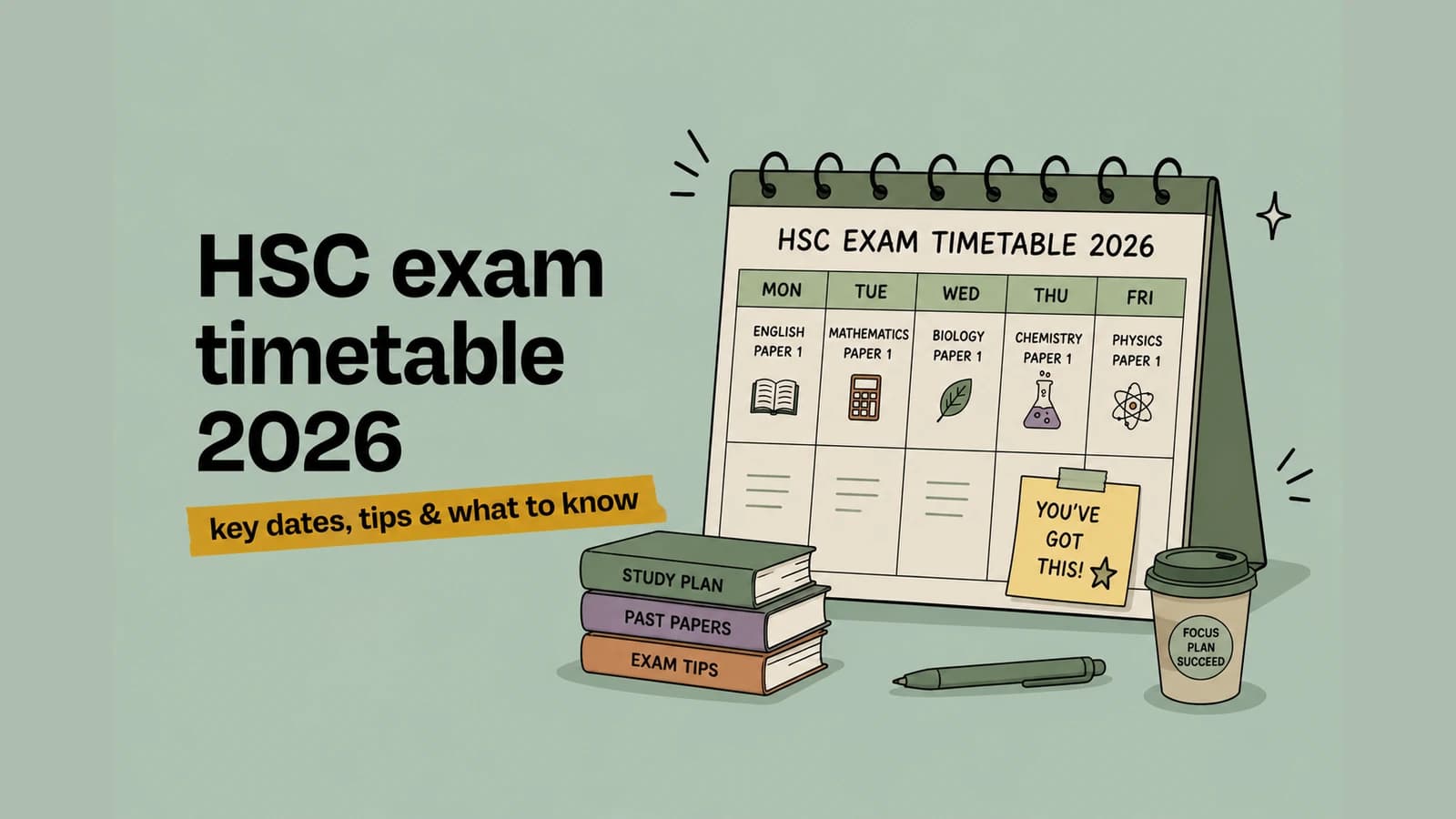
The timing is deliberate: trials finish before the written HSC exams, which in 2026 run 13 October – 5 November 2026. That makes trial season the natural deadline for having your content learnt and your exam technique sharp - whatever you fix now counts twice, once in the trials and again in October.
Where to find papers to practise with
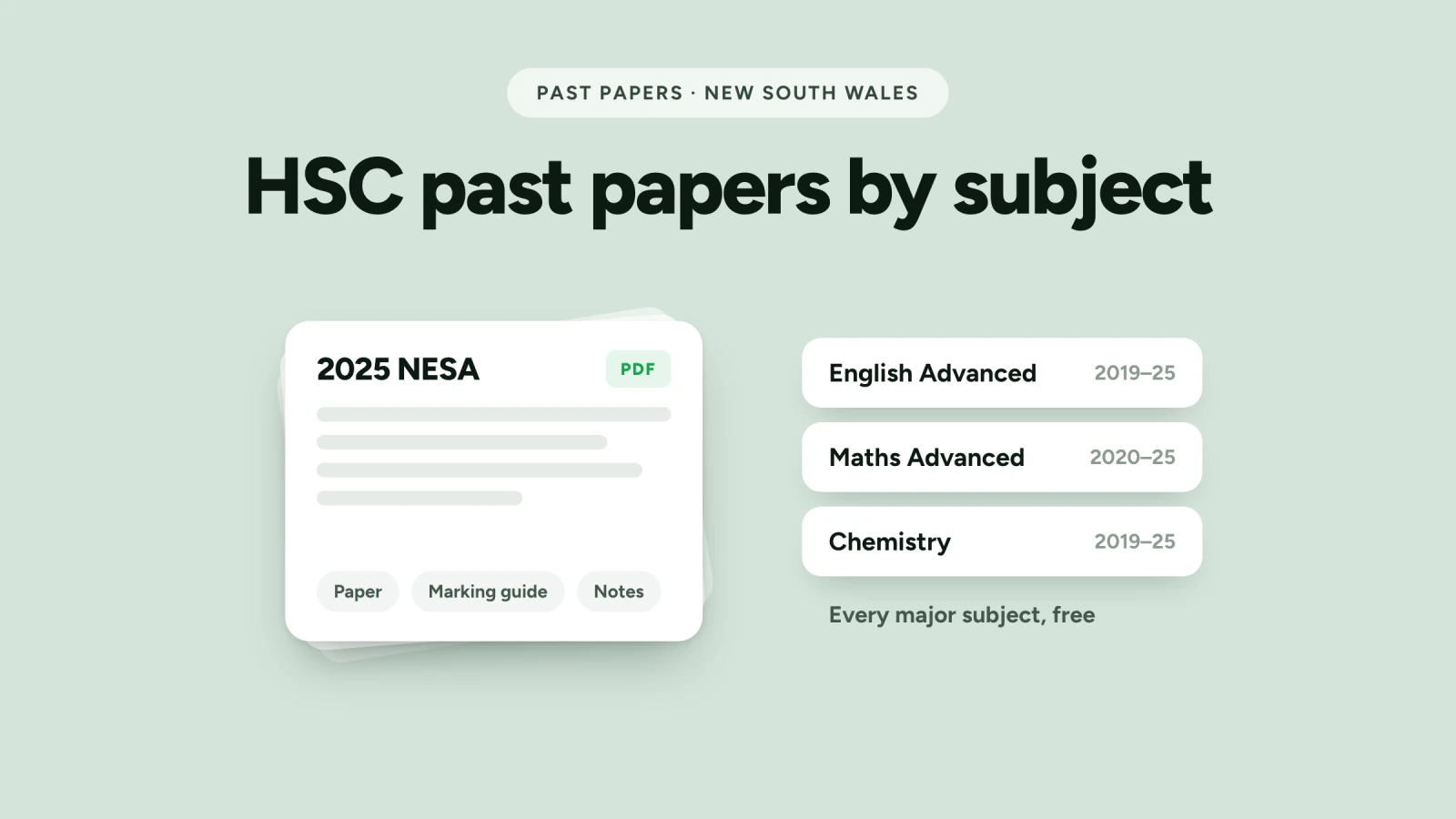
Here is the honest answer: there is no official public archive of trial papers. Trials are written by schools, or supplied to schools by exam providers, and those papers are generally not published. What you can always get - free, official and complete with marking guidelines - are NESA's past HSC exam papers. They are the real end-of-year exams the trials are modelled on, which makes them the single best practice source for trial preparation.
Official NESA past papers, by subject
Our guides link straight to the official NESA papers, marking guidelines and notes from the marking centre for every major subject - for example English Advanced, Mathematics Advanced, Biology and Chemistry.
Your school may also hand out its own past trial papers - if so, use them, because they show you exactly how your school words its questions. Treat anything else circulating online with care: unofficial papers rarely come with marking guidelines, and a paper you cannot mark properly teaches you much less.
How to simulate exam conditions
A paper only prepares you for the trials if you sit it the way you will sit the trials. The routine that works:
- One full paper, one sitting. Closed book, no phone, the real time limit - including reading time if your school uses it.
- Write by hand. The trials are handwritten, and hand stamina is a real constraint that typing practice does not build.
- Mark against the official guidelines.NESA's marking guidelines show exactly how marks are awarded - most of the improvement comes from seeing where marks are lost, not from sitting more papers.
- Read the examiner feedback. The notes from the marking centre spell out what the strongest responses did and the mistakes the whole state repeated.
- Keep an error log. One list of every mark you dropped and why. Re-test those exact topics a week later before touching new material.
Get your essays marked before trials
Essay subjects are where feedback before the trials pays off most - you can redraft an essay in a way you cannot redraft a maths paper. How the HSC actually marks English, and what lifts a response a band, is covered in our HSC essay marking guide.
Instant, examiner-style feedback
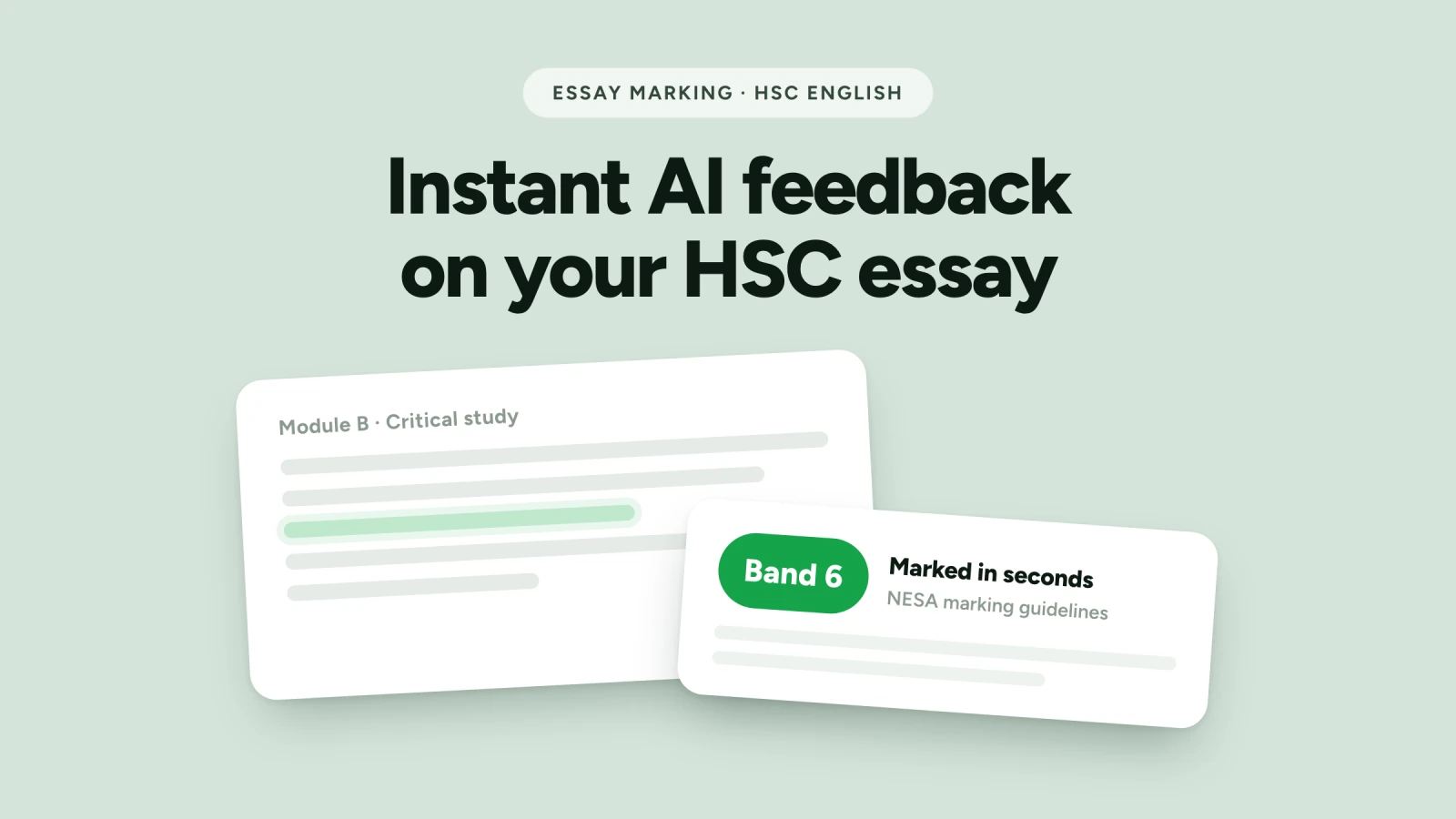
Paste or upload your essay and get an examiner-style mark and detailed feedback in seconds, graded against the official NESA marking guidelines and performance bands. Free to start - re-mark as you redraft, right up to trial day.
Frequently asked questions
Trial arrangements are set by each school, so dates and weightings on this page are described in general terms - your school's assessment schedule is the authority for your trials. HSC exam papers are © State of New South Wales (NESA); Polarbear links to the official papers and is not affiliated with or endorsed by NESA. Studying in Queensland instead? See how to practise for QCE external assessment.